


VW Bus - The First 50 Years 1949-1999
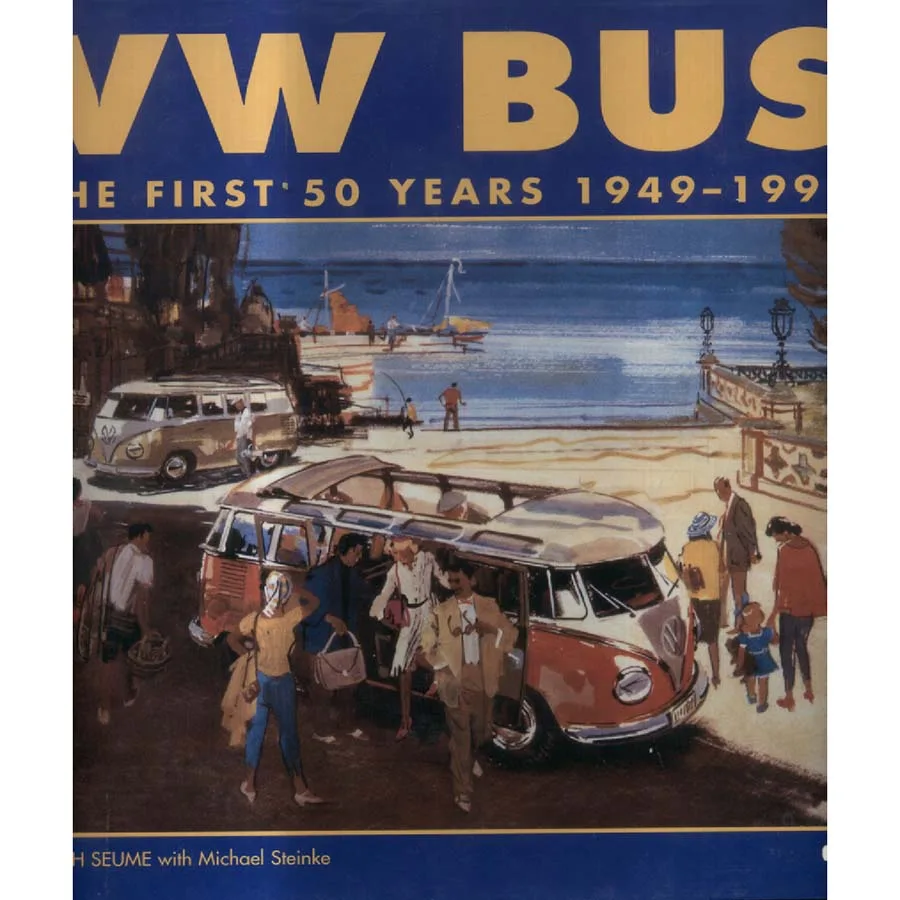
Publisher: MBI Publishing
Format: Hardback
ISBN: 9781901432268
VW Bus: The First 50 Years 1949–1999 (1999) – Keith Seume
MBI Publishing | ISBN: 9781901432268
Condition: Very Good | Sold by Crappy Old Books
The Volkswagen Bus. A magnificent automotive achievement that somehow managed to become a delivery van, family transporter, mobile bedroom, surf wagon, hippie headquarters and international symbol of freedom, all while possessing the aerodynamic sophistication of a garden shed. Few vehicles have inspired such extraordinary affection, particularly among people who appear perfectly content to spend several hours travelling at forty miles an hour while listening to an engine that sounds as though it is operating from inside a biscuit tin.
Welcome to VW Bus: The First 50 Years 1949–1999, Keith Seume’s celebration of one of the most recognisable and enduring vehicles in motoring history, tracing half a century of Volkswagen’s wonderfully versatile Transporter and its many remarkable transformations.
The story begins in the years following the Second World War, when Volkswagen was establishing itself as a major manufacturer and the practical possibilities of its humble Beetle mechanical components were becoming increasingly apparent.
The resulting Type 2 Transporter, introduced in 1950, was a masterpiece of functional simplicity. Its box-like body provided generous interior space, its rear-mounted engine left the front available for passengers and cargo, and its mechanical arrangements were sufficiently straightforward to encourage generations of enthusiastic owners to attempt repairs using little more than a spanner, optimism and several questionable suggestions from a neighbour.
The early split-screen models became particularly beloved, with their distinctive divided windscreens, rounded bodywork and charmingly upright driving position. The later bay-window Transporters introduced improvements in visibility, comfort and practicality, although nobody was under any illusions that the vehicle had suddenly transformed itself into a luxury express.
Over the decades, the VW Bus appeared in an astonishing variety of forms. Panel vans delivered goods, minibuses transported passengers, camper conversions carried adventurous families across Europe, and beautifully appointed Samba models demonstrated that even a humble commercial vehicle could acquire an unexpectedly glamorous personality.
Then came the 1960s, when the Volkswagen Bus achieved something rather more extraordinary than commercial success: it became a cultural icon.
Adopted by surfers, travellers, musicians and the counterculture, the modest Transporter became associated with freedom, communal living and the optimistic belief that life’s problems could be solved by driving towards the coast with several friends, a sleeping bag and an adequate supply of sandwiches.
Naturally, the mechanical reality was sometimes less romantic. Rust proved enthusiastic, engines occasionally objected to sustained effort, and climbing steep hills could become an exercise in patience and philosophical reflection.
Keith Seume explores the development, character and lasting appeal of these distinctive machines, celebrating their engineering, varied body styles and extraordinary place in automotive culture.
This 1999 MBI Publishing edition, offered in Very Good condition by Crappy Old Books, is an excellent acquisition for Volkswagen enthusiasts, classic camper owners, restoration devotees and anyone fascinated by the remarkable history of the world’s most famous little bus.
A splendid tribute to fifty years of practical engineering, unconventional adventure and automotive individuality.
Because while modern motorhomes offer satellite television, climate control and enough luxury equipment to rival a small hotel, the classic VW Bus provided something altogether simpler.
A steering wheel, a bed, a small engine and the freedom to go wherever the road might lead.
Eventually.
Provided there wasn’t a particularly steep hill along the way.
Keep browsing: See more Transport books Other books by Keith Seume
